Individual operators
Classic cards with callsign, station photo, antennas, location, map and QSO details area.
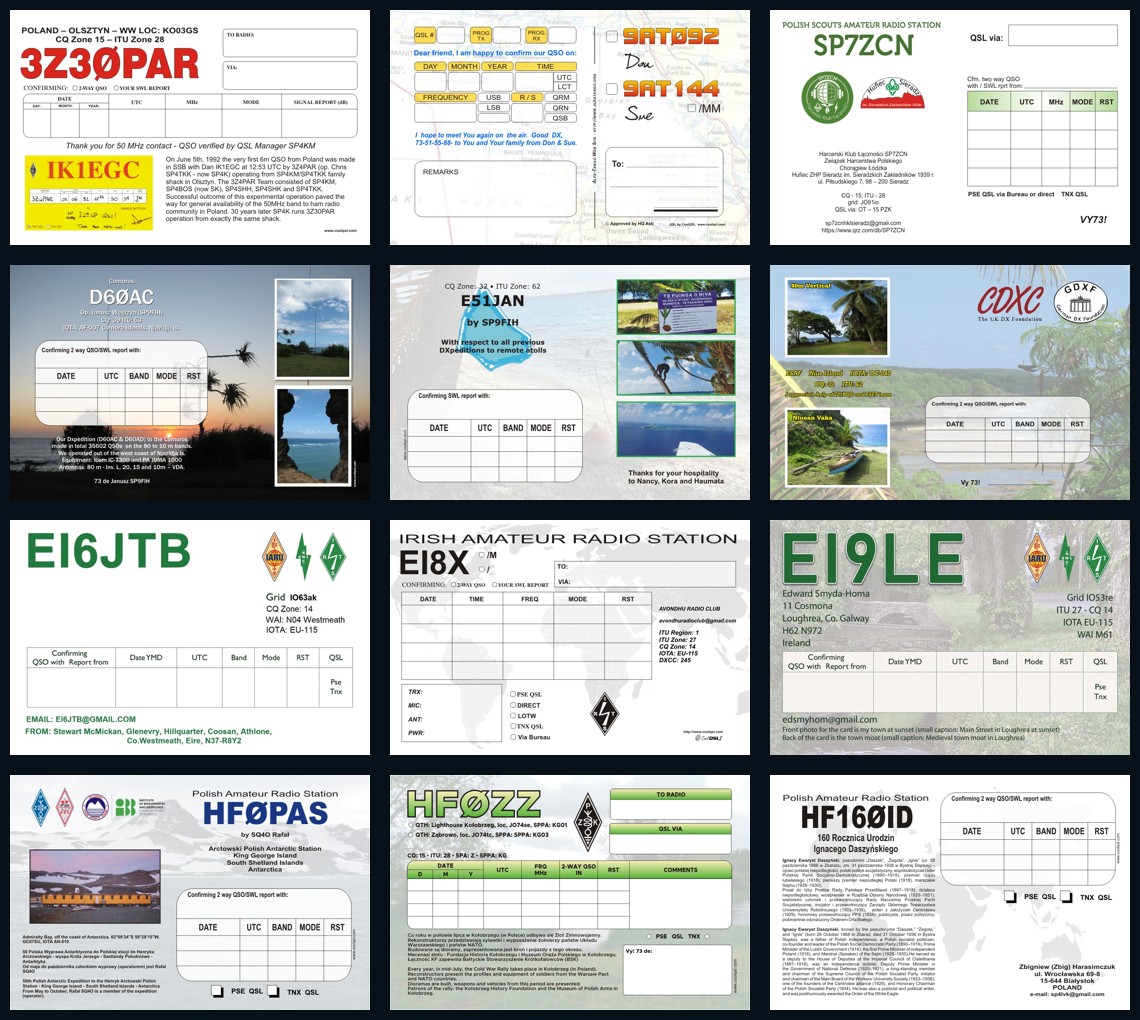
Professional QSL card design and printing: standard, premium, folded, DXpedition, contest, club and SWL cards.
Professional QSL card design and printing: standard, premium, folded, DXpedition, contest, club and SWL cards.
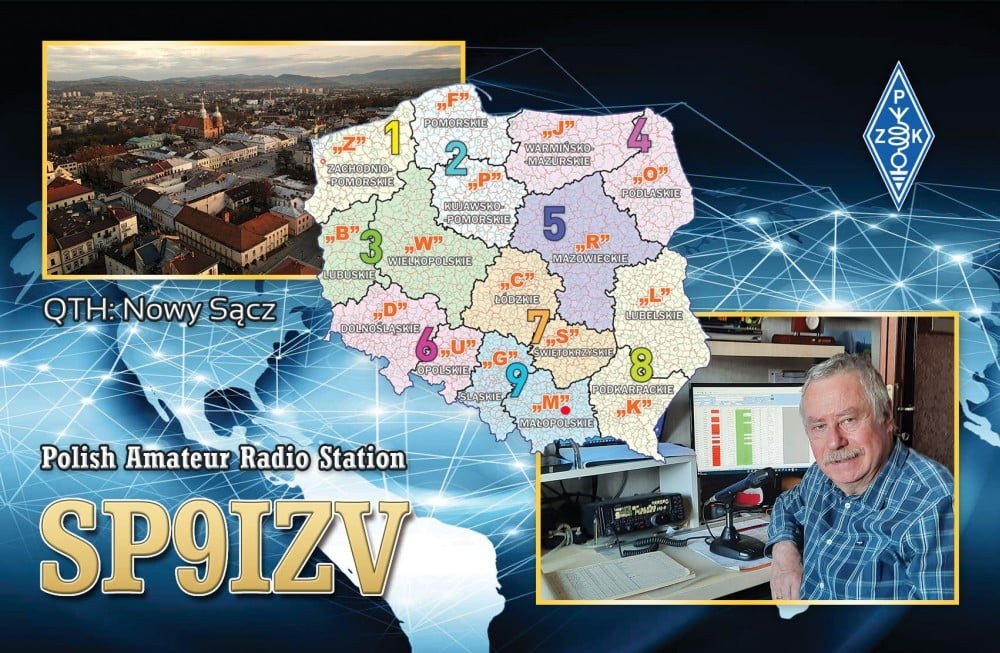
Classic cards with callsign, station photo, antennas, location, map and QSO details area.
Cards for expeditions, island activations, special callsigns and projects that must look prestigious worldwide.
Dynamic designs for contest stations, teams and clubs working major competitions.
Club, event, award and special cards consistent with club identity.
Cards for anniversaries, field activations, meetings and special ham radio projects.
Cards for shortwave listeners, collectors and people documenting reception reports.
The most popular QSL cards in a classic format for everyday contacts.
Stronger designs with more focus on photography, quality and visual impact.
More space for photos, maps, expedition story, station description and sponsors.
Designs for expeditions, IOTA, activations and special callsigns with strong first impression.
Cards for contest stations, clubs, teams and special event operations.
Card preparation or personalization based on log data, depending on the project.
We print QSL cards as single cards, double/folded cards and, for selected projects, more advanced formats. The front side is printed in full colour and finished with gloss lamination. The reverse side can be full colour or grey scale — for example with the operator photo, station description, map or additional information.
Our standard QSL cards are printed on high quality 350 gsm matte coated paper. The front side is laminated with glossy film for a more elegant look, better feel and extra protection.
We do not base our standard offer on cheap cardboard. We focus on durability and professional appearance. Good paper is less likely to bend, curl or turn yellow. Cardboard can be available only as an option for selected products, after confirmation.
In our designs we use different fonts, styles, vector graphics, shadows, perspective, masks, tonal transitions and special visual effects matched to the character of the station.
All materials can be sent via the internet. Initial proofs are usually sent as JPG files for approval. If you have a handmade sketch, you can scan or photograph it and send it together with original photos.
For the best print quality we need original high quality photos, maps, logos, scans and graphic materials in the highest possible resolution. Scanned materials should be at least 300 dpi.
Logos are best supplied as vector files. If the project includes fonts, all fonts should be converted to curves/outlines to avoid text problems during production.
The standard QSL card size is 140 × 90 mm. Other sizes are possible on request, but please ask for the price before ordering.
Finished artwork can be prepared in CorelDraw X4 or lower, Adobe Photoshop CS, or as a print-ready PDF. Project components can be sent as JPG files saved at 300 dpi.
Print artwork should be prepared at 144 × 94 mm, including 2 mm bleed on each side. After trimming, the card has the standard 140 × 90 mm size.
Important text, callsigns, logos and graphic elements should not be placed closer than 5 mm from the edge of the card.
The colour side should be prepared in CMYK at 300 dpi. The reverse side can be grey scale or full colour depending on the order.
All fonts should be converted to curves/outlines. This prevents text from changing when the file is opened on another computer.
Estimated production time is usually 5–7 days after design approval and payment confirmation.
Express production within 24 hours is possible on request, but only for selected QSL card types and after confirmation.
A ready design proof is sent by email for checking and approval. Printing starts after you confirm that everything is correct.
We produce stamps for radio amateurs, clubs and special event stations. They can include callsign, name, location, QTH data or additional information.
Stamps for QSL card confirmation, club work, DXpeditions and special events.
Stamp designs can be visually matched with QSL cards, apparel, LED signs and other graphic materials.
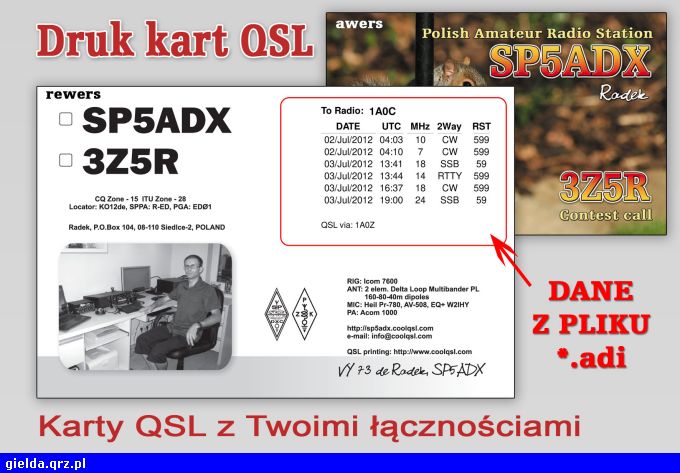
We can print your QSO data directly on QSL cards. You send your .adi log file and we prepare cards with QSO details: callsign, date, UTC, band, mode, report and QSL via information.
Who is it for? Active operators, contest calls, DXpeditions and stations that need a large number of cards prepared quickly.
How does it work? 4–8 QSO can be printed on one card, while the remaining cards can stay blank for later use.
Result: ready-to-send QSL cards with your QSO data, without handwriting all details.